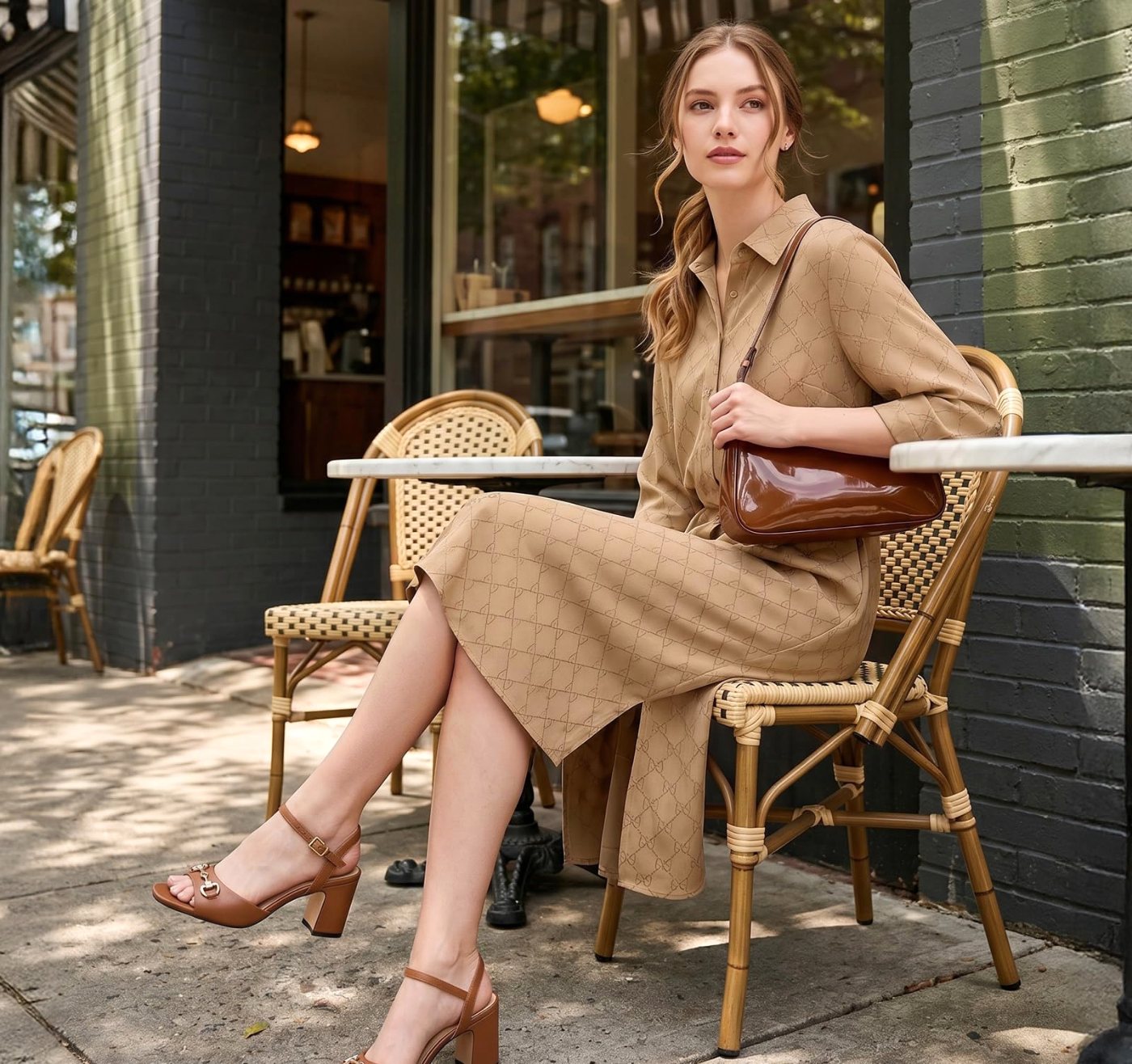
The heel you can wear from the first coffee to the last train is rarely the one you would pick for a photograph. It is shorter, a little wider, and it has a strap or a closed back that keeps your foot from sliding forward. The good news is that you can choose it by number rather than by guesswork.
Two inches is the line the specialists draw
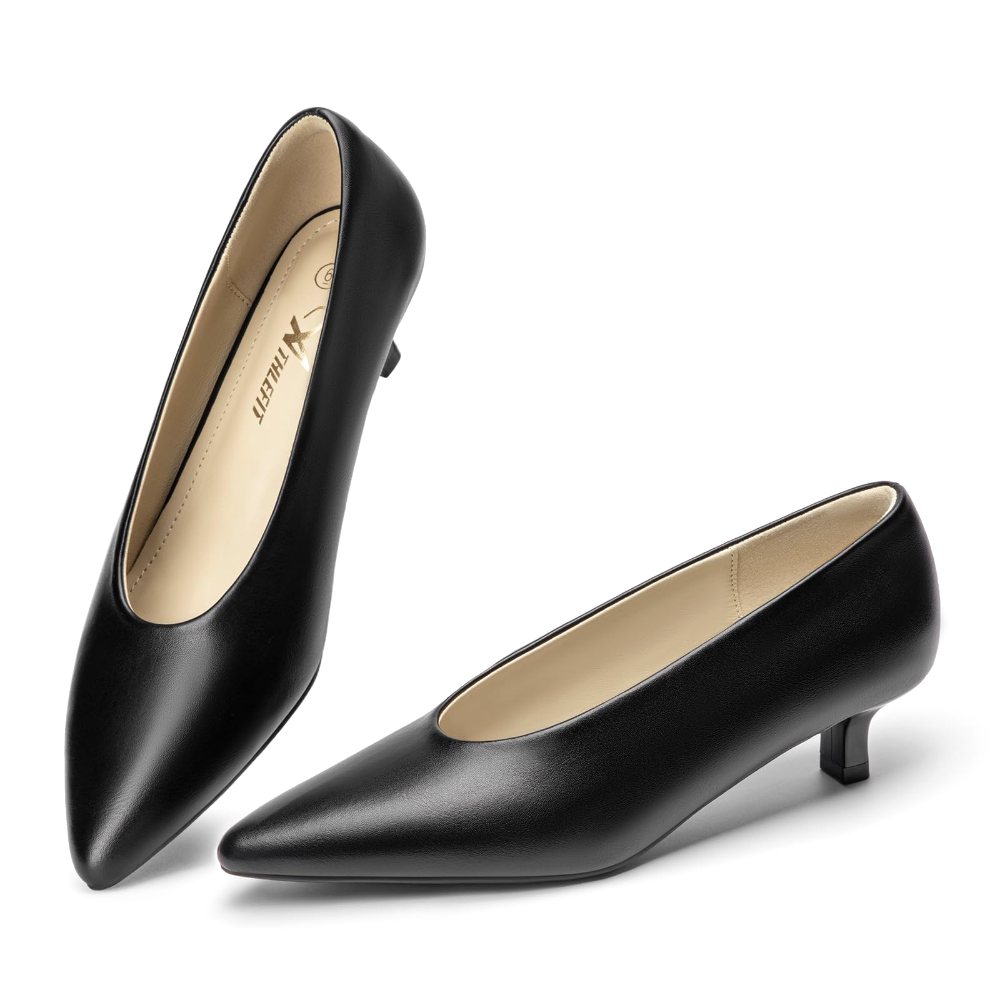
Both the American Academy of Orthopaedic Surgeons and the American Podiatric Medical Association suggest heels under two inches for everyday wear. That is not a rule against higher heels. It is the height below which a shoe asks the least of your feet over a long day.
In practice, two inches covers most kitten heels, low block heel booties and flat or near-flat knee-high boots. Across our range, the heel height sits in the product details of every style that lists one, and the heel height guide sorts every pair into flat, one to two inches, two to three, and three inches and up.
Width matters as much as height
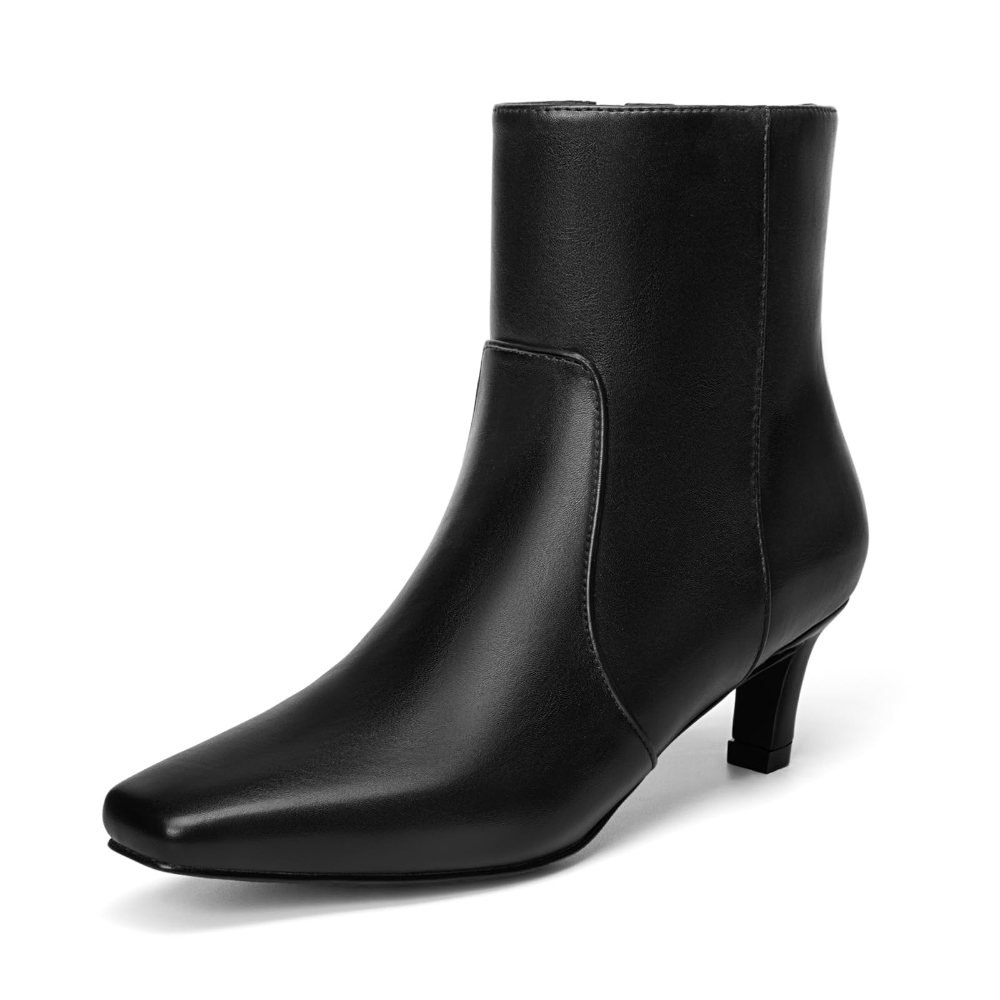
Athlefit Square Toe Kitten Heel Bootie
Ankle boot · 1.97 in heel · 10.8 in calf · 5 colors
From $39.99The American Orthopaedic Foot & Ankle Society suggests three things for anyone wearing heels: a lower heel, a wider toe box, and a wider heel for stability. A slim stiletto puts your weight on a small point. A block heel of the same height spreads it wider, and it is less likely to catch in a grate or sink into a lawn.
The toe box is the part people forget. In a heel your weight moves forward onto the front of the foot, and a sharply pointed toe is at its narrowest exactly there. A square or almond toe gives the front of your foot room to spread.
| What you are choosing | The easier choice for a long day |
|---|---|
| Heel height | Under 2 inches |
| Heel shape | Block or wedge rather than a slim stiletto |
| Toe | Square, almond or round rather than sharply pointed |
| Back of the shoe | Closed back, ankle strap or slingback strap that stays snug |
Wear time counts too
The same Society suggests wearing high heels for shorter stretches and not every day, and taking extra care on wet or uneven ground. That is a practical way to own both kinds of shoe: the low pair for the commute and the desk, the taller pair in a bag for the hour that needs it.
If you are breaking in a new pair, give them an evening at home first. Walk on a hard floor, climb a few stairs, and notice whether your heel lifts out at the back. A heel that slips is a size or a style that will not last the day.
Wedges and platforms read lower than their number
A wedge carries its height from heel to toe, and a platform lifts the front of the foot as well as the back. Either way, the slope you stand on is gentler than the heel height alone suggests. For wedge sandals, the Podiatric Medical Association prefers a wider, flatter wedge with a sole that grips.
That is why an espadrille with a wedge around two and a half inches can feel easier on a boardwalk than a pump with the same number. Check the platform height in the product details where it is listed, and the difference between the two figures tells you how steep the shoe really is.
For older feet, lower and backed
The National Institute on Aging suggests nonskid, rubber-soled, low-heeled shoes for older adults, and it counts high heels and backless shoes among the footwear that makes a fall more likely. If you are shopping for a parent, or for yourself after a fall, that points to a low heel with a closed back or a strap behind the heel, rather than a mule or a slide.
A short list to take shopping
- Pick the height first: under 2 inches for days on your feet.
- Choose a block heel or a wedge over a slim heel of the same height.
- Give your toes room: square, almond or round toes.
- Make sure something holds the heel: a closed back, an ankle strap or a snug slingback.
- Try them in the late afternoon, when your feet are at their largest.
None of this replaces advice for a foot that already hurts. If heels bring on pain in your feet, knees or back, a doctor or podiatrist is the right first stop, and the sources below are where these suggestions come from.
A question about a pair in this piece? Write to bootroom@athlefitstore.com and the people at Athlefit will answer.